Up

How to Tell If an ERP System Is a Good Fit for Your Company's Processes

Three vendors, three presentations, and by the end of the week, three proposals of similar scope. All three have convincingly demonstrated what their systems can do. The key question remains: Which one is the right fit for this company? A presentation alone won’t answer that, because it only shows the typical scenario.

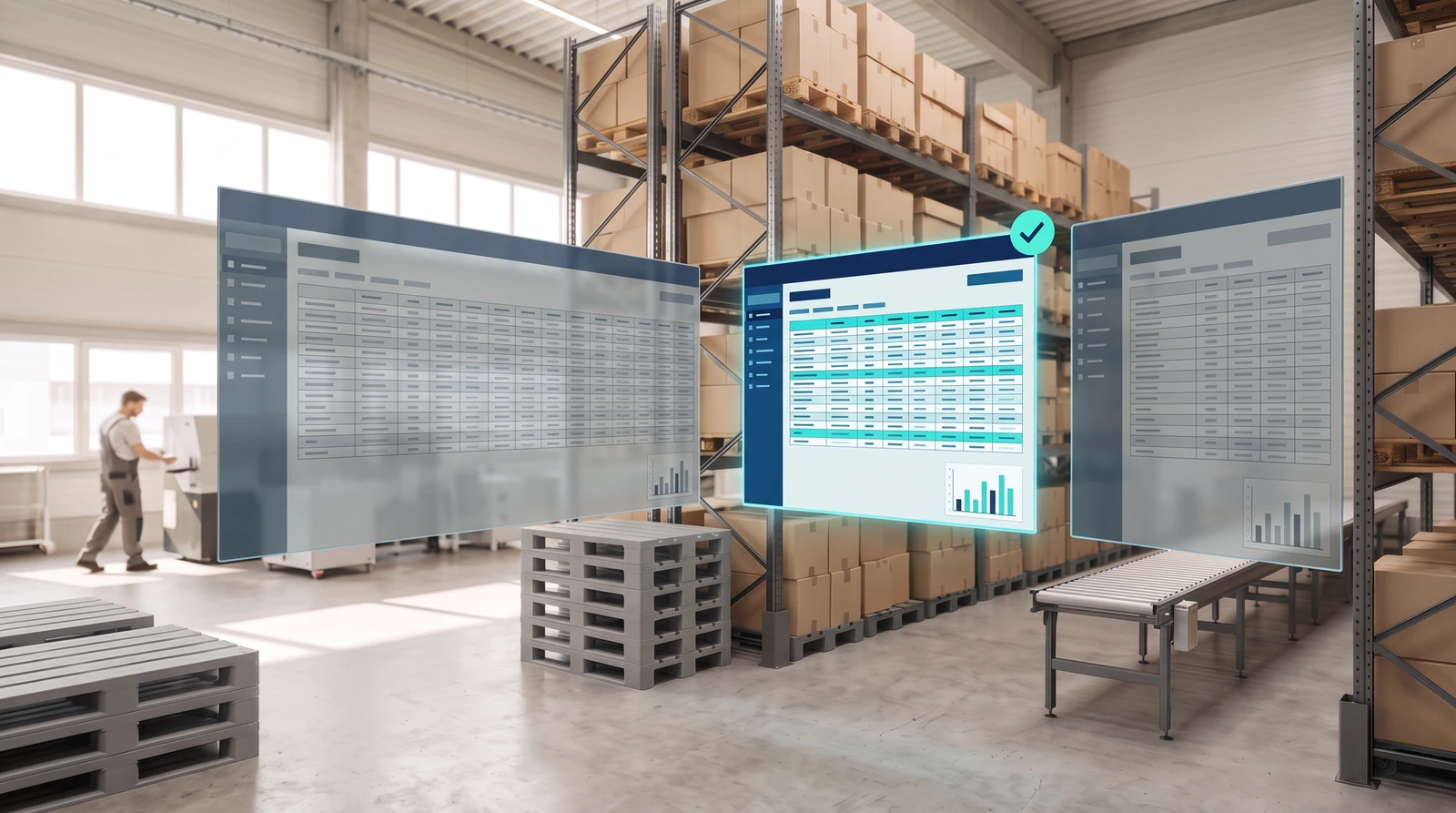
Three ERP interfaces hover above the warehouse of a medium-sized company; the one in the middle is highlighted in the ICB colors and marked with a seal of approval as the appropriate system.

Key Points at a Glance

The Key Message

Whether an ERP system is a good fit depends on a few specific points in your processes that aren’t covered in any demo. “Vendor-neutral” means that these points are the deciding factors—not the portfolio of the consultant.

Market Outlook
The entire relevant market segment
Your effort
2 to 3 hours per department
Duration
Decision proposal in 6 to 8 weeks
Interest
No licenses, no commissions

‍

Why Every Provider Says “Yes”

“Can you trace batches?” Every vendor answers this question with “Yes,” and they’re usually right. Every serious system includes some form of traceability. The question that really matters is a different one: how?

Out of the box, with a few customizations, via a certified industry solution, or only through in-house development. These are four very different answers to the same question, and they differ in both price and risk. What runs out of the box is updated with every release. What is developed in-house must be tested with every update and often reworked.

The same applies to nearly every requirement that truly shapes your business. A demo shows the standard workflow: enter an order, deliver it, and invoice it. Things get interesting with partial deliveries to two addresses on a single invoice, with returned goods and credit memos spanning the turn of the year, and with customers who order through a purchasing cooperative but pick up the goods themselves and file their own complaints. These scenarios determine your choice, and they’re not listed in any brochure.

‍

What Determines Suitability

In every selection project, there are a manageable number of points where the systems really diverge. Finding them is the real work; everything else can be compared without learning much. Experience shows that these points tend to be in the same areas.

Variations in Your Processes

Every system can handle standard operations. Whether it's the right fit becomes clear when you look at the special cases that occur daily in your business but never in others.

Your industry

Batch traceability, variant manufacturing, and purchasing budget planning in retail: Industry-specific functions differentiate the market faster than anything else because they are difficult to replicate.

Your other systems

An ERP system never stands alone. How well it integrates with CRM, the online store, warehouse management, and production control determines the ongoing costs—costs that aren't included in any licensing offer.

Its Structure

Having multiple companies, locations, or countries fundamentally changes the requirements for consolidation, intercompany eliminations, and access permissions. Growth plans need to be put on the table here.

These sections form the basis of the criteria catalog: each requirement is assigned a priority and a weight, and each evaluation specifies how a system addresses it. Two factors are excluded from the scoring. A predefined elimination criterion that a system fails to meet disqualifies it, even if it ranks highest overall. And costs are calculated separately as a 5-year TCO to ensure that a low-cost bid does not mask a technical shortcoming.
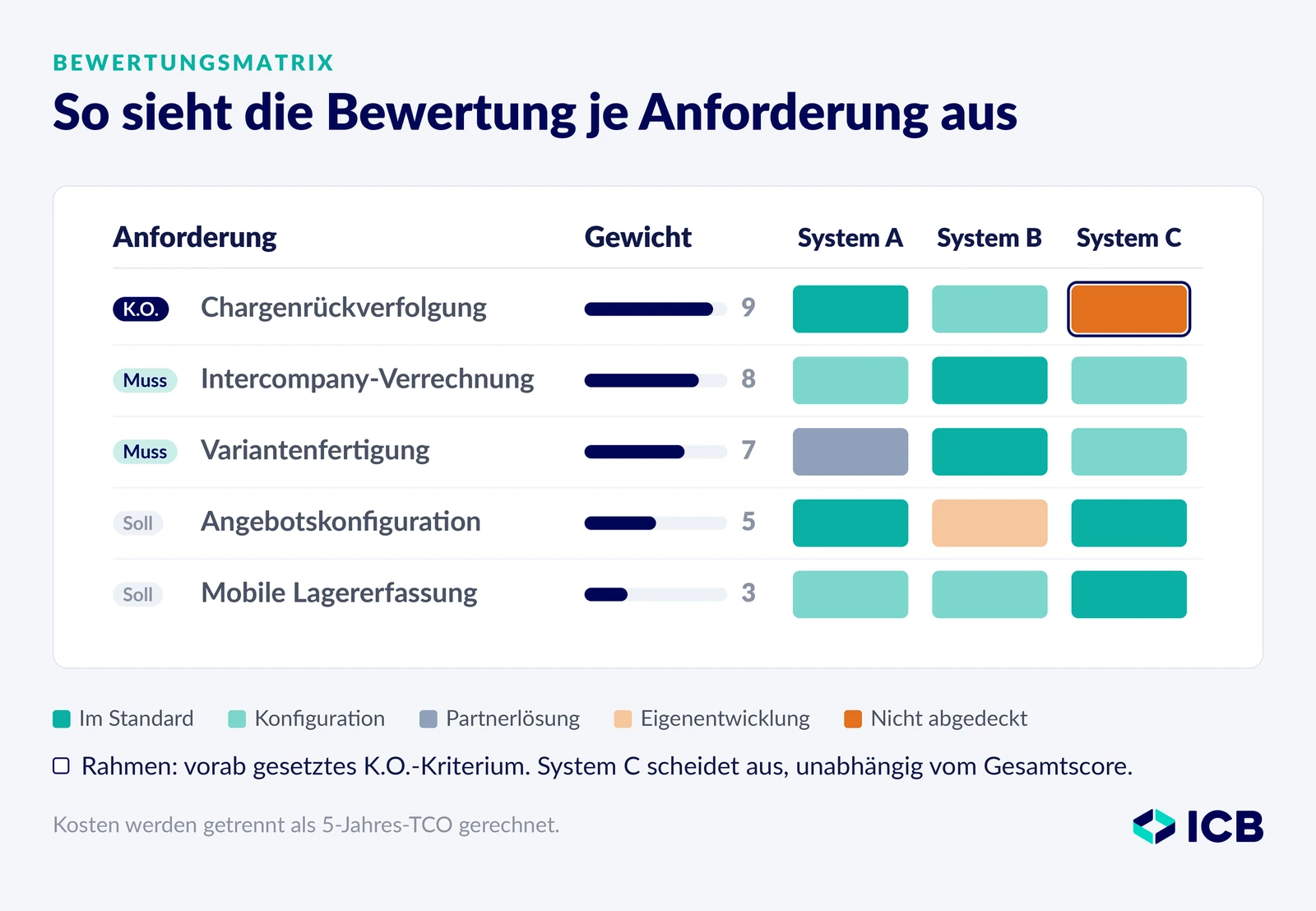
ERP Selection Evaluation Matrix: priority and weight assigned to each requirement; for each system, the solution level ranges from "standard" to "not supported"; the deal-breaker criterion is marked separately.
Graphic: Created by ICB GmbH.

‍

Whose interests are at stake in the recommendation?

There are four paths to making an ERP decision, and any one of them can work. They differ in terms of who selects the candidates and how that person is compensated. A system integrator knows its product inside and out and often implements it exceptionally well; however, its recommendations are limited to its own portfolio. ICB GmbH does not sell licenses and does not receive commissions from ERP vendors; we have been in the market since 2000.

DimensionICB · SPARK® 2.0IT Services CompanyMajor Consulting FirmInternal Project
InterestFees based on time spent; no commissions; no licensing businessMargin on licenses and implementation of our own systemDaily rates, large teams, broad scope of workNo external costs, but internal capacity
Market OutlookEntire relevant market segment, researched using AIOur Product PortfolioBroad; often less detailed in small and medium-sized businessesLimited to well-known providers
ResultDecision-making document, including TCO, phase plan, and risk registerProposal for a SystemStrategy document; implementation is usually handled by third partiesVendor comparison in Excel, rarely weighted
Duration6 to 8 weeksQuote in days, without our own analysis3 to 6 monthsOften over a period of 6 months, alongside day-to-day operations

‍

How AI Can Help You

Scanning the market, reviewing manufacturer documentation, and sorting through requirements takes a lot of time and requires little judgment. AI agents handle this work in 6 of the 7 steps of the preliminary project.

For you, this mainly changes the amount of work involved: Your departments describe their processes during a facilitated session, and everything else falls into place alongside that. And the shortlist reflects the status as of the day you make your decision, not the status at the start of the project.

Evaluation and decision-making remain human processes; every shortlist is reviewed by a consultant before it is presented to you. The data is processed in the EU in compliance with the GDPR, under a confidentiality agreement, and without using your data for model training.

‍

SPARK® 2.0: Selection and Planning in a Preliminary Design Phase

The question of suitability cannot be answered in passing, nor does it end with the selection of a system. Once you know which ERP system is the right fit, the next step is to develop an architecture, a phased plan, and a figure that will stand up to scrutiny by the advisory board. That is exactly what SPARK® 2.0 is designed for: ICB GmbH’s ERP pre-project, in which market analysis, system selection, and project planning are integrated into a single process rather than being handled as three separate engagements.

Three overlapping phases

Analysis, selection, and planning are interlinked. The weightings determined during the analysis are carried over into the selection process, and the budget is based on the same list of requirements. Nothing is assessed twice.

Six to eight weeks until a decision is made

This is made possible by the overlap and by the fact that AI agents handle the research. A process that takes half a year ultimately evaluates release statuses that are no longer current.

Two to three hours per department

The preliminary project won't take up any extra time for your staff. Just one facilitated meeting per department—the rest is handled by the consultants. Your key personnel can continue with their day-to-day work.

Our fee is not tied to the system

We do not sell licenses and do not receive commissions from ERP providers. We bill based on the work involved. The system you ultimately choose does not affect this.
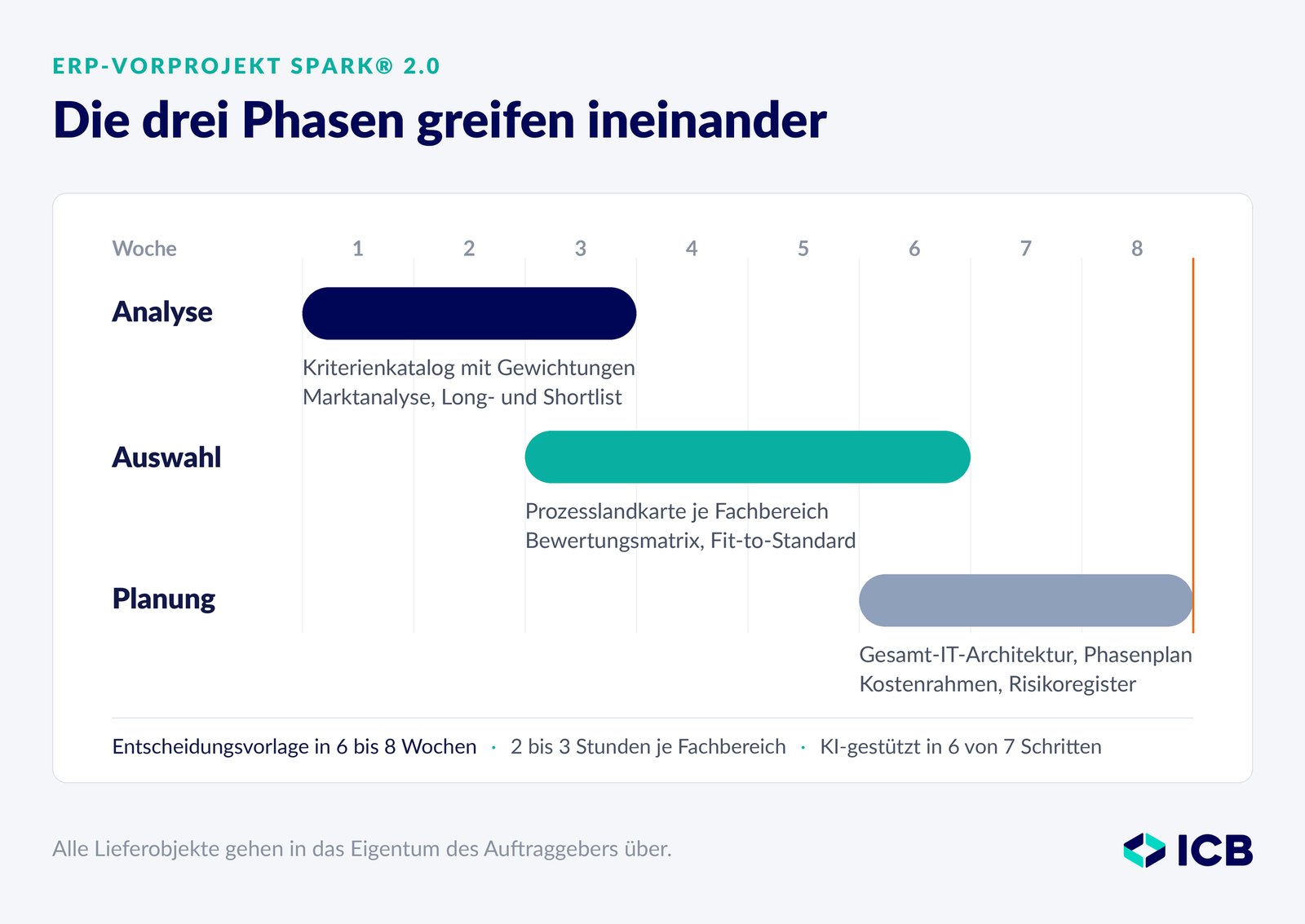
Timeline of the SPARK 2.0 ERP preliminary project over eight weeks: the analysis, selection, and planning phases overlap, culminating in a decision proposal.
Graphic: Created by ICB GmbH.

What ends up on the table

  • List of criteria with weightings and market analysis with a long list and a short list
  • Process map for each department and evaluation matrix with a "fit-to-standard" analysis for the top candidate
  • Overall IT architecture, phase plan with milestones, and budget with a 5-year TCO
  • Risk Register and Justified Decision Proposal for Management and the Advisory Board

All of this will become your property. You can use it to issue a request for proposals, negotiate, and justify your decision—even without us. Whether we assist with the implementation afterward is a separate matter and not part of this work.

‍

A Quick Introduction

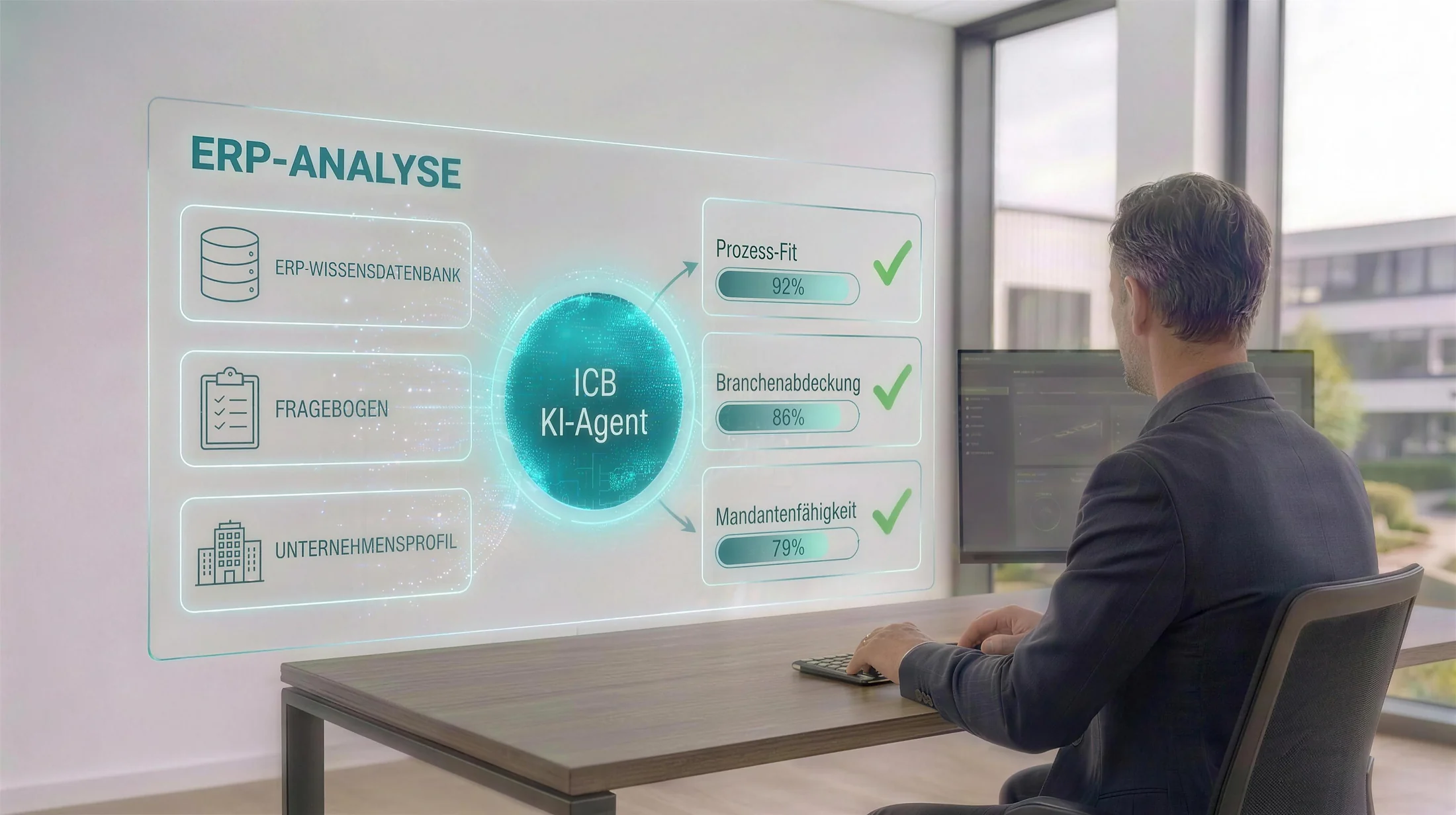
The free online ERP analysis provides an initial, vendor-neutral shortlist of 2 to 4 systems after you complete an 8- to 10-minute questionnaire—via email and without requiring registration.

The cover image was generated by AI. The evaluation matrix and timeline are original illustrations by ICB GmbH.

To our free 60 min. consultation
Calendar

When

Map

Where

Clock

Agenda

Frequently asked questions

How can I tell if an ERP system is a good fit for my company?

Down arrow

You won’t be able to tell by looking at the range of features, because every established system handles standard scenarios. The deciding factors are the special cases in your processes, industry-specific functions, compatibility with the rest of your system landscape, and your structure of companies and locations. For each of these areas, what matters is how much effort the solution requires during day-to-day operations.

Why does every ERP provider claim to meet a certain requirement?

Down arrow

Because it's usually true. The question is about functionality, and every established system offers that in some form. The answer only becomes meaningful after two follow-up questions: What does a user have to do to use it, and what will happen to it in the next release of the system?

How many systems should be included on an ERP shortlist?

Down arrow

The long list covers the relevant market segment; only a handful of systems make it to the detailed evaluation. Each additional candidate takes up workshop time for your departments and, beyond a certain point, provides little additional insight. On the other hand, too few candidates weaken your negotiating position as soon as a favorite realizes this.

How much work does the ERP selection process entail for the departments?

Down arrow

Each department is expected to require 2 to 3 hours. During this time, a facilitated session will take place in which participants describe their processes and set priorities. Market research, documentation, and follow-up are handled by the consulting firm, which uses AI agents for these tasks. No additional meetings are scheduled.

What happens if an ERP system is already in use?

Down arrow

An open-ended assessment is then conducted to determine whether migration, optimization, or a change is economically viable. This does not alter the process: The existing system is included as a candidate and evaluated against the same set of criteria. Deciding to keep the existing system is a valid outcome and must be justified in the same way as a decision to change.

Share article

Table of contents
Want an outside perspective? 45 minutes via Teams—open and honest, no sales pitch.

Key Points at a Glance

The Key Message

Whether an ERP system is a good fit depends on a few specific points in your processes that aren’t covered in any demo. “Vendor-neutral” means that these points are the deciding factors—not the portfolio of the consultant.

Market Outlook
The entire relevant market segment
Your effort
2 to 3 hours per department
Duration
Decision proposal in 6 to 8 weeks
Interest
No licenses, no commissions

‍

Why Every Provider Says “Yes”

“Can you trace batches?” Every vendor answers this question with “Yes,” and they’re usually right. Every serious system includes some form of traceability. The question that really matters is a different one: how?

Out of the box, with a few customizations, via a certified industry solution, or only through in-house development. These are four very different answers to the same question, and they differ in both price and risk. What runs out of the box is updated with every release. What is developed in-house must be tested with every update and often reworked.

The same applies to nearly every requirement that truly shapes your business. A demo shows the standard workflow: enter an order, deliver it, and invoice it. Things get interesting with partial deliveries to two addresses on a single invoice, with returned goods and credit memos spanning the turn of the year, and with customers who order through a purchasing cooperative but pick up the goods themselves and file their own complaints. These scenarios determine your choice, and they’re not listed in any brochure.

‍

What Determines Suitability

In every selection project, there are a manageable number of points where the systems really diverge. Finding them is the real work; everything else can be compared without learning much. Experience shows that these points tend to be in the same areas.

Variations in Your Processes

Every system can handle standard operations. Whether it's the right fit becomes clear when you look at the special cases that occur daily in your business but never in others.

Your industry

Batch traceability, variant manufacturing, and purchasing budget planning in retail: Industry-specific functions differentiate the market faster than anything else because they are difficult to replicate.

Your other systems

An ERP system never stands alone. How well it integrates with CRM, the online store, warehouse management, and production control determines the ongoing costs—costs that aren't included in any licensing offer.

Its Structure

Having multiple companies, locations, or countries fundamentally changes the requirements for consolidation, intercompany eliminations, and access permissions. Growth plans need to be put on the table here.

These sections form the basis of the criteria catalog: each requirement is assigned a priority and a weight, and each evaluation specifies how a system addresses it. Two factors are excluded from the scoring. A predefined elimination criterion that a system fails to meet disqualifies it, even if it ranks highest overall. And costs are calculated separately as a 5-year TCO to ensure that a low-cost bid does not mask a technical shortcoming.

ERP Selection Evaluation Matrix: priority and weight assigned to each requirement; for each system, the solution level ranges from "standard" to "not supported"; the deal-breaker criterion is marked separately.
Graphic: Created by ICB GmbH.

‍

Whose interests are at stake in the recommendation?

There are four paths to making an ERP decision, and any one of them can work. They differ in terms of who selects the candidates and how that person is compensated. A system integrator knows its product inside and out and often implements it exceptionally well; however, its recommendations are limited to its own portfolio. ICB GmbH does not sell licenses and does not receive commissions from ERP vendors; we have been in the market since 2000.

DimensionICB · SPARK® 2.0IT Services CompanyMajor Consulting FirmInternal Project
InterestFees based on time spent; no commissions; no licensing businessMargin on licenses and implementation of our own systemDaily rates, large teams, broad scope of workNo external costs, but internal capacity
Market OutlookEntire relevant market segment, researched using AIOur Product PortfolioBroad; often less detailed in small and medium-sized businessesLimited to well-known providers
ResultDecision-making document, including TCO, phase plan, and risk registerProposal for a SystemStrategy document; implementation is usually handled by third partiesVendor comparison in Excel, rarely weighted
Duration6 to 8 weeksQuote in days, without our own analysis3 to 6 monthsOften over a period of 6 months, alongside day-to-day operations

‍

How AI Can Help You

Scanning the market, reviewing manufacturer documentation, and sorting through requirements takes a lot of time and requires little judgment. AI agents handle this work in 6 of the 7 steps of the preliminary project.

For you, this mainly changes the amount of work involved: Your departments describe their processes during a facilitated session, and everything else falls into place alongside that. And the shortlist reflects the status as of the day you make your decision, not the status at the start of the project.

Evaluation and decision-making remain human processes; every shortlist is reviewed by a consultant before it is presented to you. The data is processed in the EU in compliance with the GDPR, under a confidentiality agreement, and without using your data for model training.

‍

SPARK® 2.0: Selection and Planning in a Preliminary Design Phase

The question of suitability cannot be answered in passing, nor does it end with the selection of a system. Once you know which ERP system is the right fit, the next step is to develop an architecture, a phased plan, and a figure that will stand up to scrutiny by the advisory board. That is exactly what SPARK® 2.0 is designed for: ICB GmbH’s ERP pre-project, in which market analysis, system selection, and project planning are integrated into a single process rather than being handled as three separate engagements.

Three overlapping phases

Analysis, selection, and planning are interlinked. The weightings determined during the analysis are carried over into the selection process, and the budget is based on the same list of requirements. Nothing is assessed twice.

Six to eight weeks until a decision is made

This is made possible by the overlap and by the fact that AI agents handle the research. A process that takes half a year ultimately evaluates release statuses that are no longer current.

Two to three hours per department

The preliminary project won't take up any extra time for your staff. Just one facilitated meeting per department—the rest is handled by the consultants. Your key personnel can continue with their day-to-day work.

Our fee is not tied to the system

We do not sell licenses and do not receive commissions from ERP providers. We bill based on the work involved. The system you ultimately choose does not affect this.

Timeline of the SPARK 2.0 ERP preliminary project over eight weeks: the analysis, selection, and planning phases overlap, culminating in a decision proposal.
Graphic: Created by ICB GmbH.

What ends up on the table

  • List of criteria with weightings and market analysis with a long list and a short list
  • Process map for each department and evaluation matrix with a "fit-to-standard" analysis for the top candidate
  • Overall IT architecture, phase plan with milestones, and budget with a 5-year TCO
  • Risk Register and Justified Decision Proposal for Management and the Advisory Board

All of this will become your property. You can use it to issue a request for proposals, negotiate, and justify your decision—even without us. Whether we assist with the implementation afterward is a separate matter and not part of this work.

‍

A Quick Introduction

The free online ERP analysis provides an initial, vendor-neutral shortlist of 2 to 4 systems after you complete an 8- to 10-minute questionnaire—via email and without requiring registration.

The cover image was generated by AI. The evaluation matrix and timeline are original illustrations by ICB GmbH.

Would you like an outside perspective? We’ll assess your current situation—a 45-minute session via Teams, open and without a sales pitch.
Calendar

When

Map

Where

Clock

Agenda

Frequently asked questions

How can I tell if an ERP system is a good fit for my company?

Down arrow

You won’t be able to tell by looking at the range of features, because every established system handles standard scenarios. The deciding factors are the special cases in your processes, industry-specific functions, compatibility with the rest of your system landscape, and your structure of companies and locations. For each of these areas, what matters is how much effort the solution requires during day-to-day operations.

Why does every ERP provider claim to meet a certain requirement?

Down arrow

Because it's usually true. The question is about functionality, and every established system offers that in some form. The answer only becomes meaningful after two follow-up questions: What does a user have to do to use it, and what will happen to it in the next release of the system?

How many systems should be included on an ERP shortlist?

Down arrow

The long list covers the relevant market segment; only a handful of systems make it to the detailed evaluation. Each additional candidate takes up workshop time for your departments and, beyond a certain point, provides little additional insight. On the other hand, too few candidates weaken your negotiating position as soon as a favorite realizes this.

How much work does the ERP selection process entail for the departments?

Down arrow

Each department is expected to require 2 to 3 hours. During this time, a facilitated session will take place in which participants describe their processes and set priorities. Market research, documentation, and follow-up are handled by the consulting firm, which uses AI agents for these tasks. No additional meetings are scheduled.

What happens if an ERP system is already in use?

Down arrow

An open-ended assessment is then conducted to determine whether migration, optimization, or a change is economically viable. This does not alter the process: The existing system is included as a candidate and evaluated against the same set of criteria. Deciding to keep the existing system is a valid outcome and must be justified in the same way as a decision to change.

Share article

Close icon